Jihlava was an important mining and trading town in Moravia. During the Hussite Wars it remained a Catholic stronghold of the royal side.
Town timeline
- 1233
A charter records the earlier settlement by the church of St John the Baptist.
- 1240–1243
The mining town of New Jihlava is established under Wenceslas I.
- 5 July 1436
The Jihlava Compacts are proclaimed in the town square
Control and government, 1400–1471
- 1400–1419
A royal mining town in Moravia with its own council. Margrave Jobst backs the town early in the period.
- 1420–1435
A Catholic council and its defenders keep Jihlava on the royal side.
- 1436–1457
The royal town is governed by its council. The Compacts are proclaimed here in 1436 in Sigismund’s presence.
- 1458–1466
George of Poděbrady forces Jihlava to submit by siege and confirms its privileges. The town retains its council.
- 1467–1471
Jihlava’s council joins Moravian towns in opposition to George and backs Matthias Corvinus.
In the Hussite Wars
Catholic Jihlava was never captured by the Hussites. On 5 July 1436 the Compacts of Basel were proclaimed in its square in the presence of the parties and Sigismund.
Discover the town
The negotiations at Jihlava in 1436 linked the Moravian town to the search for peace throughout the kingdom. The proclamation of the compacts opened the way for Sigismund’s acceptance as king of Bohemia.
Places that shaped the town
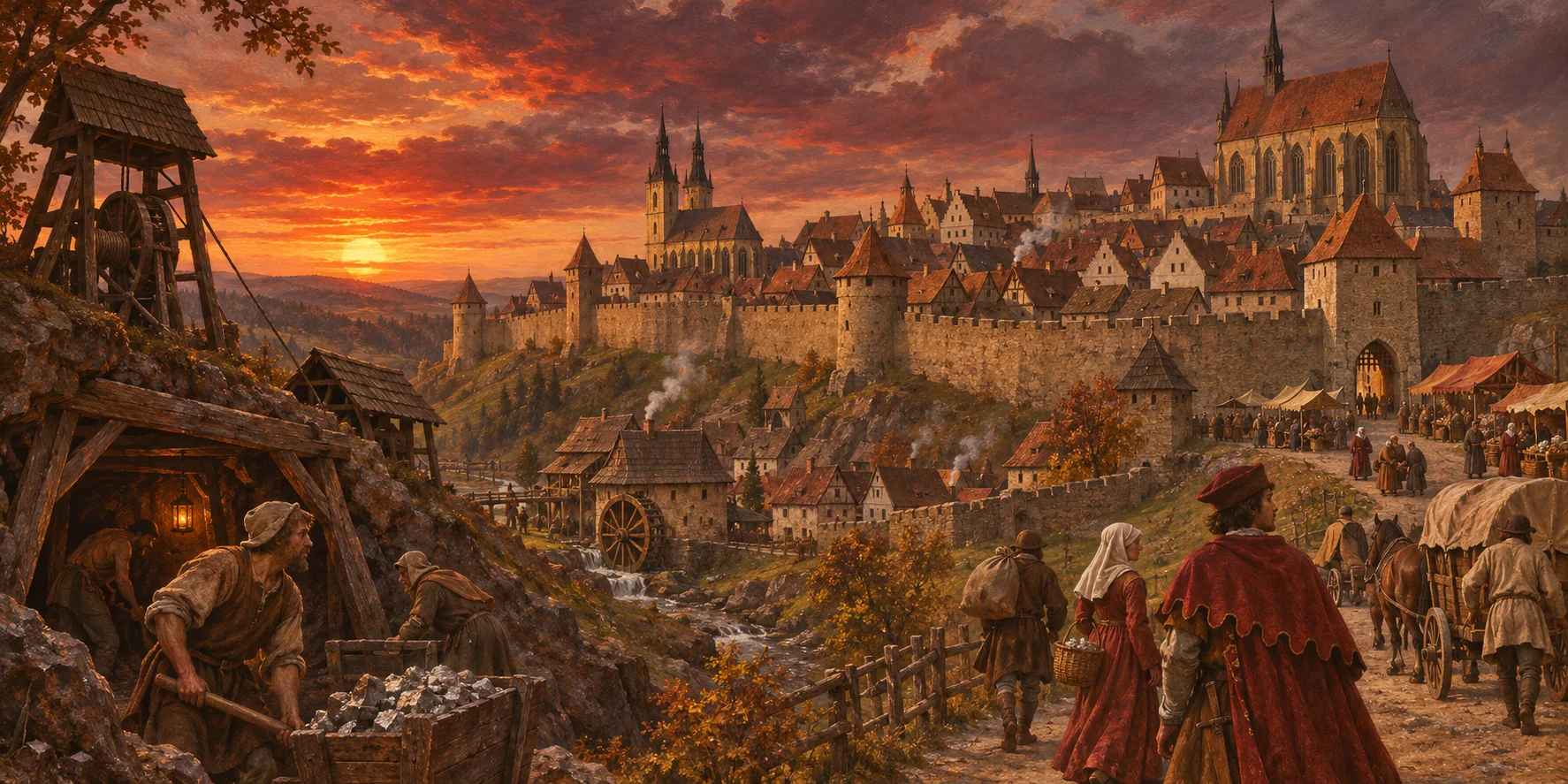
The town prospered through silver mining and trade. Its walls and gates protected residents and markets on routes between Bohemia and Moravia.
The town and the game’s world
Jihlava lies in Moravia, outside the Bohemian border drawn on our map. Its negotiations show that the story of the wars continued beyond the great battles.