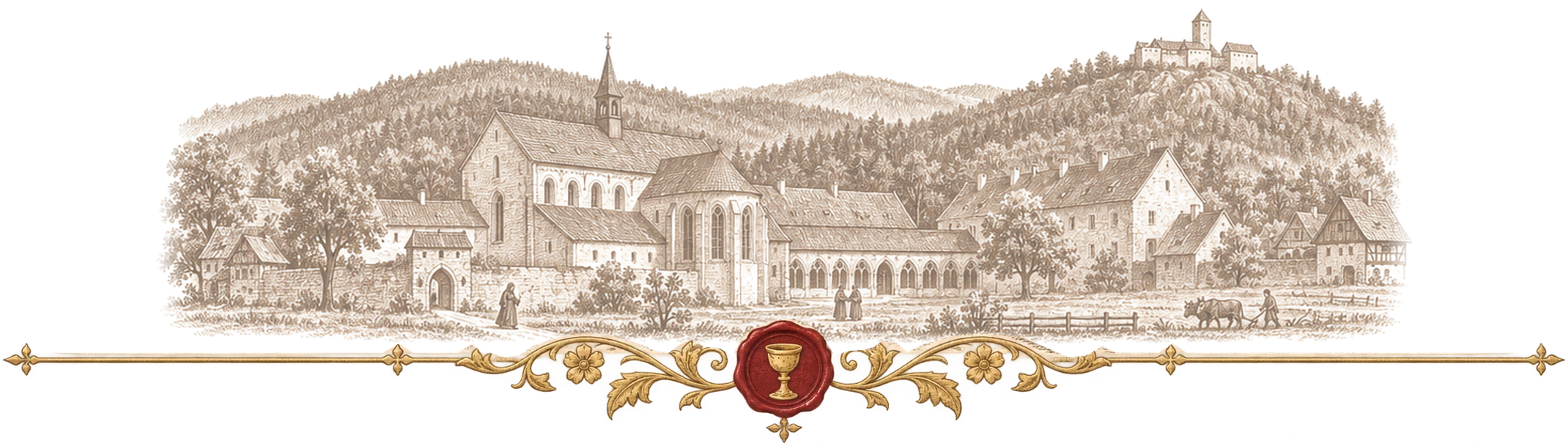
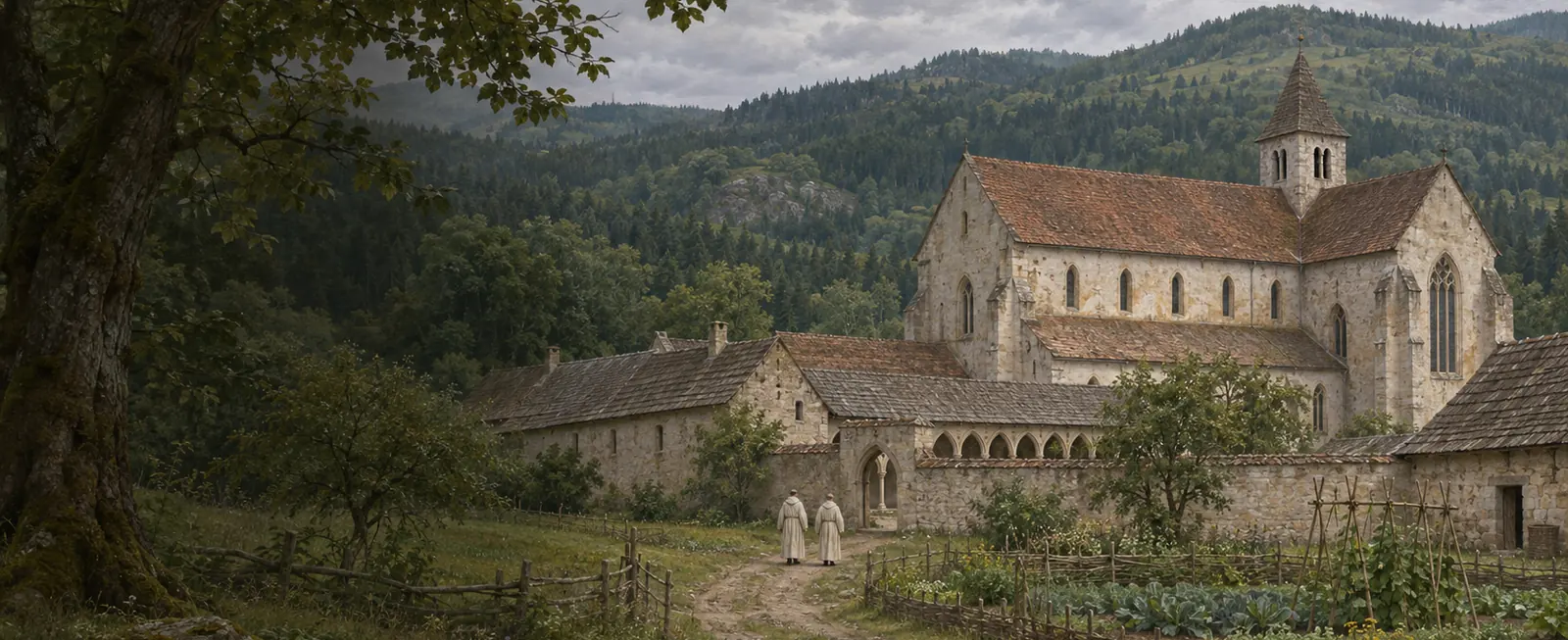
In the summer of 1421, Prague’s Hussites burned Osek Abbey. The Cistercian community found refuge at Altzella Abbey in Saxony.
Town timeline
- c. 1196
Cistercian monks found Osek Abbey with the support of the Hrabišic lords.
- 1421
Prague’s Hussite forces burned the Cistercian abbey at Osek. Its community had already taken refuge at Altzella in Saxony.
- 1426
The Regional Museum in Teplice records the arrival of a Saxon army at Osek.
Control and government, 1400–1471
- 1400–1420
The abbot and Cistercian community hold the abbey and its estates. A burgrave of the Meissen margraves governs nearby Rýzmburk Castle.
- 1421–1458
After the abbey is burned, part of the community takes refuge at Altzella. Under Sigismund the Cistercians lose parts of their estates. The Meissen margraves still hold Rýzmburk.
- 1459–1471
Rýzmburk Castle returns from Meissen to the Bohemian Crown under George of Poděbrady. The abbey remains Cistercian.
An abbey and a castle below the Ore Mountains
Osek stood on the Bohemian side of the Ore Mountains, close to routes into Meissen. The Cistercian abbey in the valley grew under the patronage of the Hrabišic family. It held villages, farms and revenues on both sides of the mountains. Above Osek stood Rýzmburk Castle, guarding a mountain crossing. In 1398 Boreš of Rýzmburk sold the estate to the Margrave of Meissen. The margraves held the castle throughout the Hussite Wars.
1421 · The abbey burns and the monks leave for Saxony
In July 1421 a Prague Hussite army reached the abbey, occupied it and set it alight. Before the attack the monks had left for the Cistercian abbey of Altzella in what is now Saxony. The Regional Museum in Teplice credits their departure with saving some of the abbey’s valuables, including books. The surviving records and manuscripts point to Osek’s role as a place where charters were kept and books were used for worship and study.
1426 and 1429 · Further accounts of the war
The Regional Museum in Teplice records the arrival of Saxon troops at the abbey in 1426. The abbey’s own historical account dates a further attack to 1429 and reports the deaths of monks. These accounts leave the circumstances of the later attack and the number of casualties uncertain. The reports about the abbey and about Meissen’s possession of Rýzmburk concern two separate sites in the same area.
A return to the damaged abbey
Under Sigismund of Luxembourg some of the abbey’s possessions passed into other hands. The Monastic Trails account places the first monks’ return to the damaged buildings around the mid-fifteenth century. The re-established community had fewer resources than before the war. At Osek, the damage to religious life and the abbey’s economy outlasted the fighting itself.