
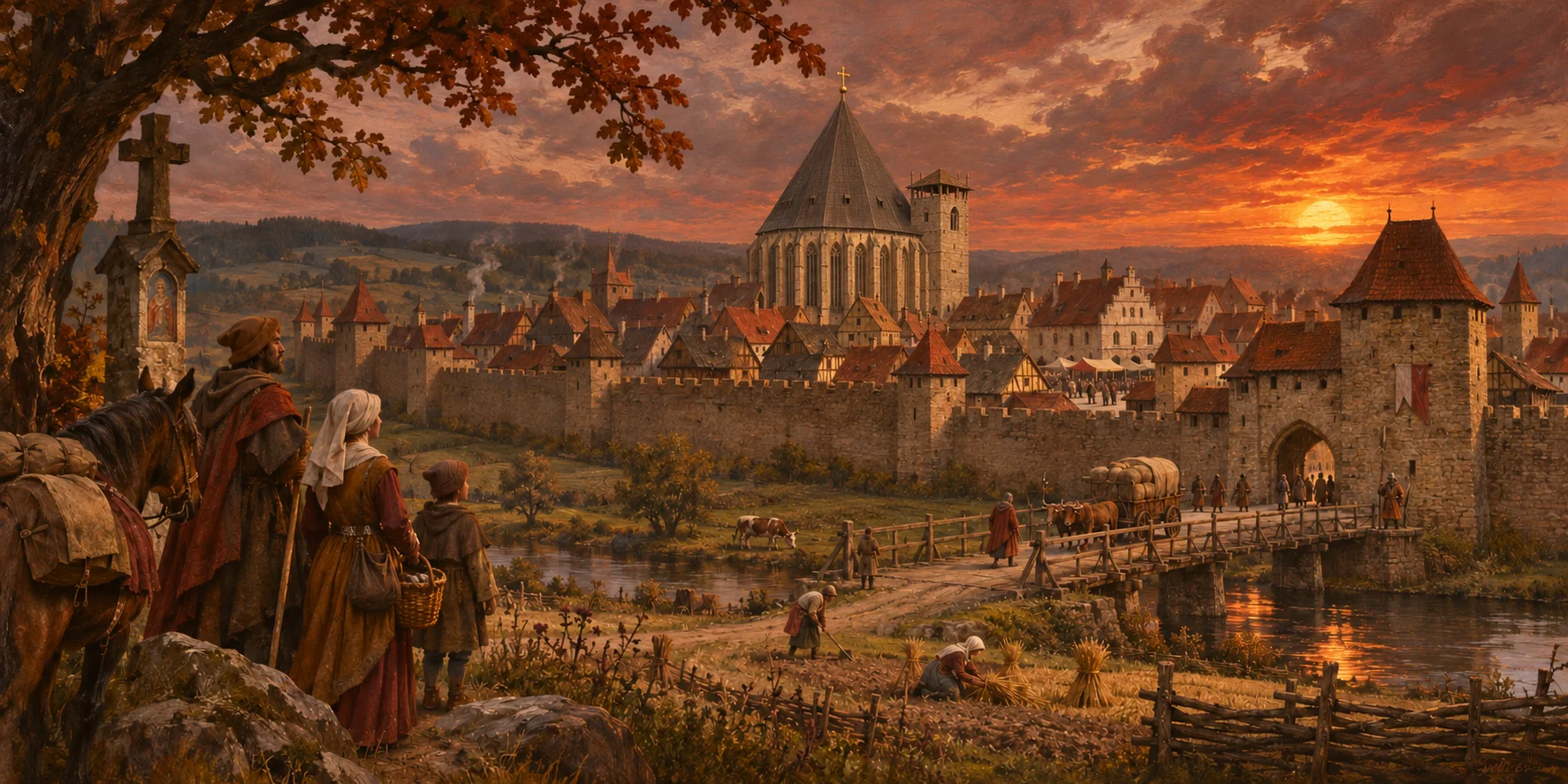
Žižka left Plzeň for southern Bohemia in 1420. The Catholic city later resisted a long Hussite siege in 1433–1434.
Town timeline
- c. 1295
Wenceslas II orders New Pilsen to be laid out at the confluence of the rivers, under the locator Henry.
- March 1420
Žižka and his followers leave Plzeň
- July 1433
The long Hussite siege begins
- 9 May 1434
Hussite forces end the siege
Control and government, 1400–1471
- 1400–1418
A royal town under Wenceslas IV. Václav Koranda’s movement gains influence in 1414.
- 1419
Václav Koranda and South Bohemian Hussites, including Jan Žižka, find support in Pilsen.
- 1420–1448
After the Hussites leave, Pilsen’s council backs the Catholic side. Sigismund rewards the defenders with a Golden Bull in 1434.
- 1449–1465
A Catholic town council. Pilsen joins the Strakonice League in 1449, which opposes George of Poděbrady.
- 1466–1471
The town goes into open opposition and recognises Matthias Corvinus in 1468.
In the Hussite Wars
After Žižka’s departure in 1420, Plzeň became a stronghold of the Catholic side. The Hussite siege of 1433–1434 ended without the city falling.
Discover the town
The story of the siege includes a camel captured by Plzeň’s defenders from the Hussite camp. It later appeared in the city’s coat of arms, where it remains a reminder of the episode.
Places that shaped the town
The Church of St Bartholomew stood on Plzeň’s main square. Before the Hussite Wars it had a tall tent roof, different from its later appearance.
The town and the game’s world
The long siege shows the importance of supplies and city walls. In the game’s world, defence and a community’s ability to endure a long campaign matter too.
